Delta Air Lines took in 16% more revenue and still cut its profit forecast by about a quarter. PepsiCo and Yaskawa told smaller versions of the same story. The cost of fuel and money is landing below the headline, in margins, in private deals public buyers won't match, and on anyone who borrowed. 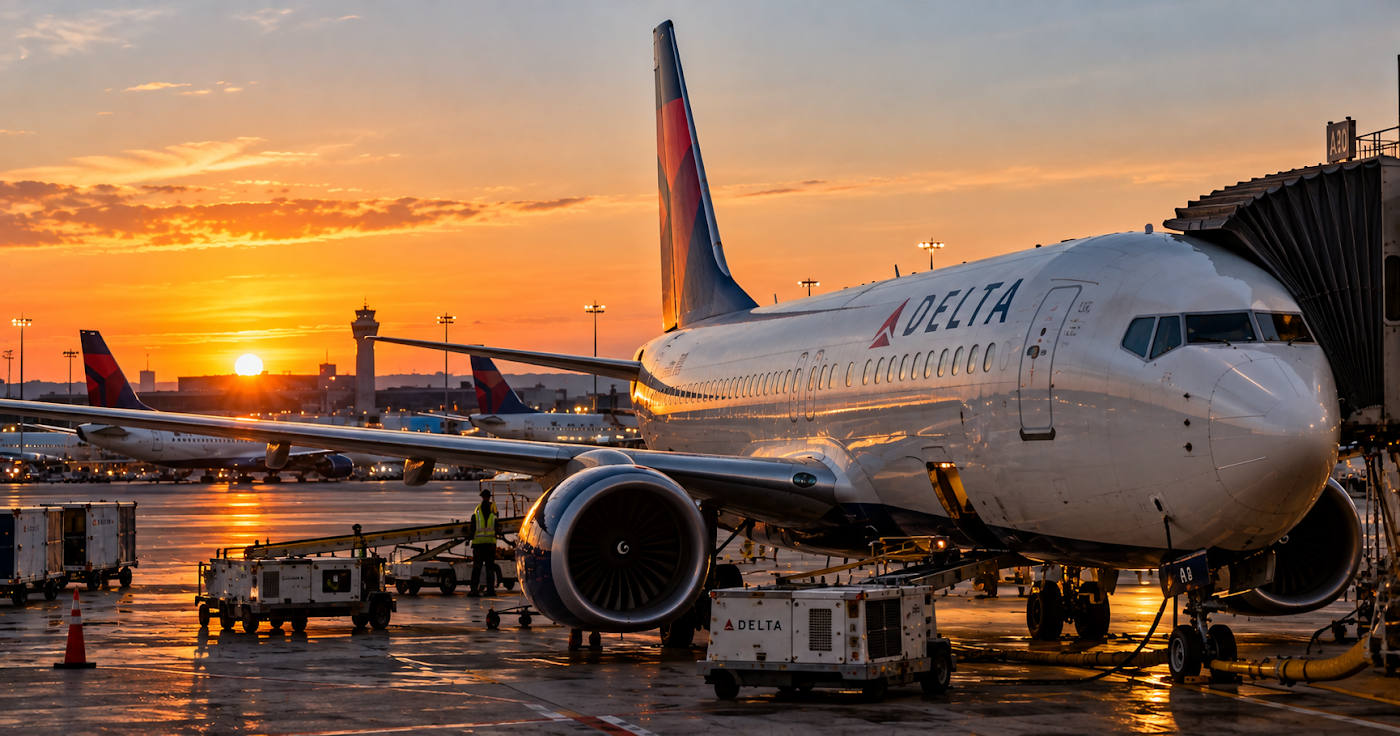
| 01 | Sales Grew. Margins Paid for It.Three companies sold more this quarter. All three now expect to keep less of it. |
| Delta Charged More and Still Earned LessDelta Air Lines (DAL) cut its 2026 profit forecast Friday to $5.10 to $5.60 a share, from $6.50 to $7.50. Sales were fine. Adjusted revenue rose 16%, and Delta expects about 20% growth this quarter. Fuel was not. Third-quarter fuel costs jumped 62% to $4.1 billion, and the airline expects this year's fuel bill to run about $6 billion above last year's. "All of it's fuel," finance chief Erik Snell told Reuters. Fares averaged about 25% above a year earlier from April through August and still couldn't keep up. Shares fell 3% premarket. |
| PepsiCo's Profit Growth Came From a RefundPepsiCo (PEP) beat estimates Thursday as revenue rose 5.6%. It raised its revenue view and cut its profit outlook for the year. The beat had help. Tariff refunds added 4 points to core operating profit growth of 3%, so without the one-time refunds core profit would have slipped about 1%. Organic growth came from abroad. Both North American units were flat, and management said the fix at home is taking longer than planned. |
| Yaskawa Raised Sales and Cut Profit on the Same DayYaskawa Electric, the Japanese maker of factory motors and robots, raised its sales forecast and cut its profit forecast. First-half revenue rose 9.8%. Operating profit fell 5.5%. Motion control, which sells into data centers and chip plants, grew profit 33%, while robotics profit fell 43% and a new software system disrupted shipments. A weaker yen helped the sales line. The second half needs a margin of about 11.3%, against 7.7% in the first. Revenue is where prices and currency show up. Margin is where the costs do. |
Outlier Signal Each company's sales rose partly on price or currency: higher fares at Delta, pricing that offset lost volume at PepsiCo, a weaker yen at Yaskawa. Costs rose faster. Strong revenue usually reads as strong demand. Here part of it is inflation passing through the top line, so activity looks busy while earnings shrink. Exposed are companies that can't reprice as fast as costs climb, starting with other airlines. If Delta holds its fourth-quarter margin with Brent above $100, pricing is keeping pace. If United and American cut too this month, the squeeze is industry-wide. | 02 | Private Money Is Holding the PricePrivate owners set the price. Public shareholders took the swing. |
| A Private Owner Flipped the AirwavesLate Thursday, private firm Grain Management agreed to sell its nationwide 800 MHz airwaves to SpaceX (SPCX). Grain bought the same band from T-Mobile in August for $2.9 billion in cash plus other licenses. People familiar put SpaceX's price near $8 billion. Then the carriers fell. By 5:20 a.m., AT&T (T) was down 7.4%, Verizon (VZ) 6.8% and T-Mobile (TMUS) 6.9%, about $38.5 billion of value and close to five times the reported price. Verizon called it "empty airwaves" without a network. |
| Firmus Picked Private Money Over a Lower PriceFirmus, the Nvidia-backed (NVDA) Australian data-center builder, withdrew its IPO Friday and will raise private capital rather than accept a lower public price. The A1.1 billion in Firmus orders. The next private round sets the mark... and nobody knows which side of August it lands on. |
| Waymo Borrowed Instead of ListingWaymo, the self-driving unit of Alphabet (GOOGL), closed a $5 billion term loan, its first debt. PIMCO, Blackstone (BX) and Sixth Street led, with Apollo (APO) and Blue Owl (OWL) among 14 named lenders. It was reportedly priced about 5.25 percentage points over the benchmark, a steep rate for a unit of one of the world's largest tech groups. Waymo keeps its ownership. |
Outlier Signal Private capital is becoming the place where prices avoid a public test. Grain earned a markup holding airwaves between two public owners. Firmus walked away from the public's price. Waymo raised $5 billion without letting public investors price its equity. Plentiful private money usually reads as confidence. Underneath, public buyers keep declining the private price, and private lenders are charging for that gap with spreads like the one on Waymo's loan. Public holders absorb the swings. Exposed are late private backers, suppliers like Maas and credit funds holding untraded marks. If Firmus raises above its August valuation, private markets still clear. A round below it would say the public price was the real one. | 03 | Borrowed Money Moves FirstThe buyer at the margin has changed. So has how fast it sells. |
| Bailey Warned About Who Owns Gilts NowBritain's 10-year yield touched about 5.53% Thursday, its highest since 2007. Bank of England Governor Andrew Bailey said the buyers have changed. Leveraged investors play a much larger role, while pension demand for long debt has faded, and borrowed positions can be forced to sell. The budget lands Oct. 28. EY puts the fiscal cushion at £11.3 billion, under half March's level. Kalshi's October Fed hike contract rose to 18 cents from 16. One block did much of it. |
| Ether Took Far More of the FlushAbout $1.19 billion of leveraged crypto bets were forced shut over 24 hours, with ether losing about $356 million and bitcoin about $298 million. Scaled by market value, ether took about six times bitcoin's damage. Bitcoin was back near $82,500 early Friday. Fund money didn't follow. U.S. bitcoin and ether funds have returned about $986 million this month. Thursday, Fidelity's fund did most of the bitcoin selling and BlackRock's (BLK) most of ether's. The rebound cleared leverage. It didn't bring buyers. |
Outlier Signal In gilts, crypto and event contracts, prices are moving on who holds the position more than on news. Leveraged funds now sit where pensions did, one fund per asset did most of Thursday's crypto fund selling, and one trade moved the October Fed odds. Rising gilt yields read as a British fiscal scare, and crypto's bounce as an all-clear. Both reads skip the holder. Financed positions get sold first and fast, so moves run bigger both ways and say less about conviction. Exposed are Britain's budget and ether holders. If fund data after Friday's close shows buyers returning, the flush did its job. If gilts keep rising faster than Treasuries into Oct. 28, the forced seller is British.  One force runs through all three signals. Fuel and money cost more than the headlines show, and the bill lands where the cushion is thinnest: airline margins, private marks and borrowed positions. Airline rivals report this month, and Britain's budget lands Oct. 28. |
|


